
When Google brought AI Overviews to UK users in 2024, many SEO teams saw a clear pattern in their Google Search Console data. Impressions for info queries stayed the same or went up. But click rates on those same queries dropped. The content still showed up in search results. But fewer users clicked through to the page. This pattern matters for anyone working with AI Overviews in 2026.
The real picture of AI Overviews is simpler than most people think. Google says AI Overviews show up for some queries. They help users understand topics and find what they need. Google also says links in AI Overview answers get better clicks. What Google hasn't told us is which queries trigger AI Overviews or how much traffic changes. The numbers you see in SEO groups are guesses, not real data from Google.
This article looks at what we know for sure about AI Overviews in UK search results. We'll show you how to read your Search Console data and what changes make sense for your content plan.
What Google has told us about AI Overviews
Google's docs say AI Overviews pull info from across the web. They create a summary with links to sources. The system uses Google's language models with its search index. This means AI Overview content shows Google's view of source quality, not just keyword matches. Google says the system won't show an AI Overview for queries where a summary wouldn't help. It also skips medical, legal, or money topics that need care.
Google hasn't given us a full list of when AI Overviews appear. From watching UK search results in early 2026, we see patterns. AI Overviews show up most on info queries. They rarely appear for shopping or nav queries. They sometimes show up for buying queries. These are patterns we see, not rules from Google. Building a content plan on these patterns is risky because Google can change them anytime.
Fun fact: Google's AI Overviews started in the US in May 2023 before coming to the UK. They use Google's Gemini models built into search rankings. This makes them different from chatbots that search the web on their own.
How to read click rate changes in Google Search Console
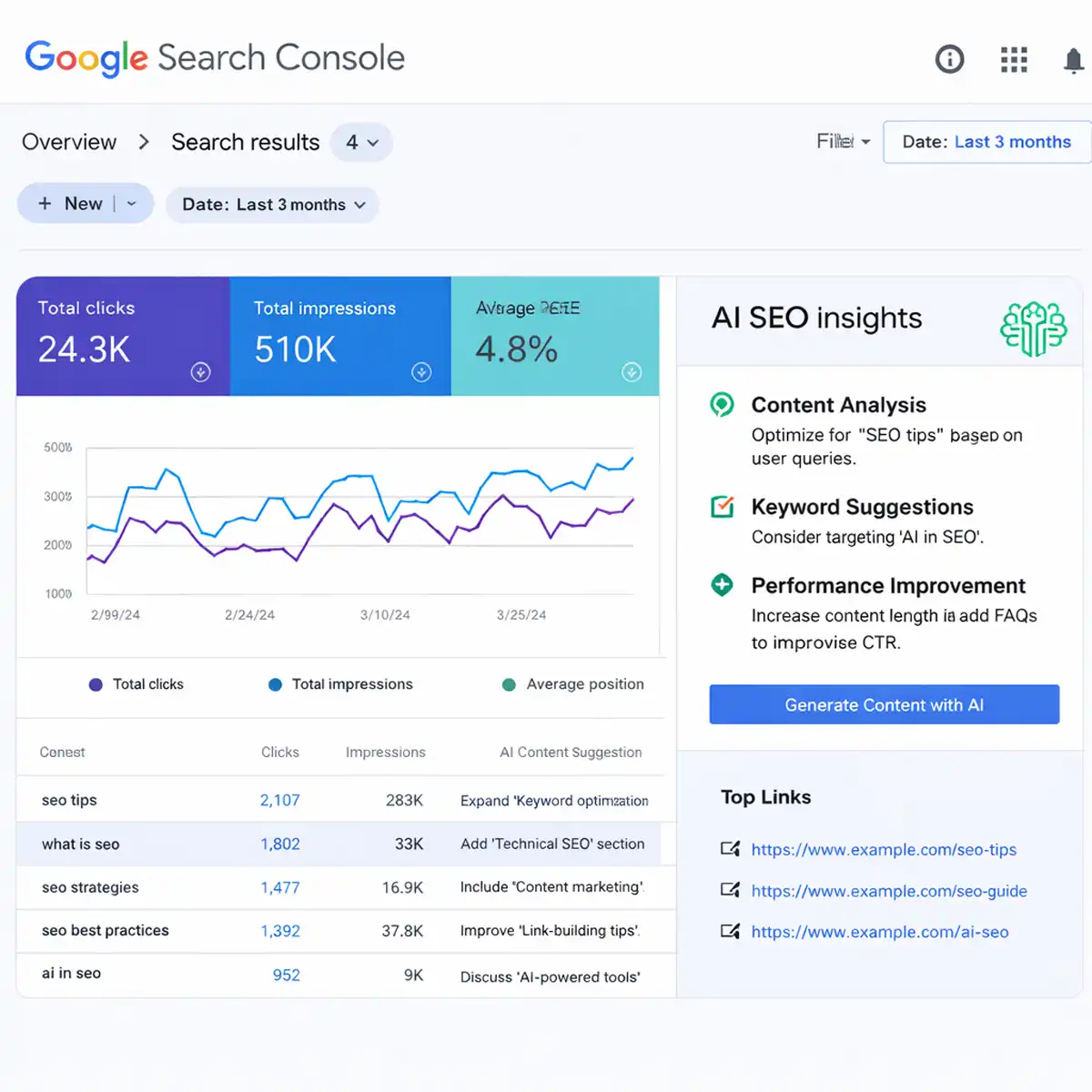
Start with your Google Search Console data report. Filter to queries where impressions stayed the same or grew over 3 months, but click rates dropped by 2 points or more. Export these queries and group them: branded queries, info long-tail queries, and buying research queries. If click rates drop mainly in info long-tail queries while branded and buying queries stay normal, this suggests AI Overviews are affecting those info queries.
But be careful what this pattern means. Click rate drops on info queries can also happen from featured snippet changes, search page updates, People Also Ask growth, and seasonal changes. Google Search Console doesn't show which queries had AI Overviews. So you can't directly blame click rate drops on AI Overviews using GSC data alone. The pattern suggests it might be AI Overviews, but you need more proof.
Here's how to check: Search your affected queries by hand in UK search results. Use private browsing and set your location to United Kingdom. Write down whether an AI Overview appears for each query with dropping click rates. If AI Overviews show up for 60% or more of your high-impression dropping queries, the pattern makes sense. If they appear for less than 30%, other search page changes likely caused the drops.
What content gets into AI Overviews
Google says links in AI Overview answers get better clicks. Content that appears in AI Overviews usually comes from sources Google sees as trusted and well-built. This means content that meets Google's quality standards has a better chance of AI Overview inclusion. These standards include showing E-E-A-T, giving direct answers to questions, and using clear structure with H2 and H3 headings. This isn't a separate "AI Overview tuning" plan. It's the same quality standard Google has always written about.
What's not proven is that specific formatting triggers AI Overview inclusion. Some experts claim certain formatting choices (bullet points, definition-first paragraphs, specific word counts) help get into AI Overviews. These claims come from watching, not proven facts. You can test these ideas, but don't treat them as proven plans.
For UK publishers looking ahead: Google plans to expand AI Overviews to more queries. The system learns from user activity. Content that truly helps users with depth and accuracy will stay relevant as the system improves. Content that exists only to rank for info queries, without real depth, faces higher risk as AI-made answers get better.
UK differences from US data
AI Overviews came to UK users after US users. The UK search landscape is different, so US data doesn't always apply to the UK. UK search volumes for many info queries are smaller than US ones. This affects how reliable AI Overview data is from watching tools. UK users might respond differently to AI Overviews than US users. UK-specific data from IAB UK and JICWEBS gives better baseline info than US studies.
The UK legal context adds another layer. The Competition and Markets Authority is reviewing Google's AI mixing into search. This review is part of their look into AI Foundation Models and search markets. This doesn't directly affect day-to-day work, but it means AI Overview behavior in UK search results might face limits not present elsewhere. Watch both the CMA's review outputs and search results for the full UK picture.
Ask the right question before changing strategy
The key question for experts is specific: Are the queries where I'm losing click rates the same queries where AI Overviews appear? And if so, could my content be included in those answers, or is it being pushed out entirely? The first part you can answer with the GSC check and search watching method above. The second part requires checking if your content provides direct, well-built, trusted info that Google's AI systems select.
If your content is helpful and well-built but still not appearing in AI Overview citations, focus on external backlinks and entity authority rather than changing content format. If your content is thin or mainly tuned for keyword density rather than genuine info depth, the AI Overview push-out aligns with Google's stated direction. The response is editorial. The sites that will maintain organic visibility as AI Overviews develop in UK search results won't be the ones with aggressive AI Overview tuning tactics. They'll be the ones whose content would have met strict quality standards anyway. That's not reassuring. But it's the accurate read of what Google has confirmed.